
Every facility manager has budget constraints, and that means you have to make some choices about priorities. Decisions often lean toward “tyranny of the urgent” – you need a new roof, you need to repave the parking lot, etc. Things like launching sustainability initiatives and becoming LEED certified can seem like a luxury…but they aren’t.
Your building’s low-slope roofing can’t be all that complicated. After all, just about everybody has one…right?
Not exactly. Even low-slope roofs come in an astounding array of options. And, if you weren’t directly involved in the design and planning process, you might not know much more about your roof than what’s visually obvious. But you really should get to know your roof better, so let’s make some introductions.Topics: Roofing Management, Roof Architecture
The days are getting longer, temperatures are creeping up, and you may have even swatted a few mosquitoes. Summer is definitely on the way, and facility managers know that means increased energy costs and a struggle to keep the building cool. Fortunately, you don’t have to cross your fingers and hope for cooler weather. With some proactive roof management, there are several things you can do to help keep your building cool.
Topics: Roofing Management
It’s a moment every maintenance professional dreads – a building occupant calls to report a leak, and it’s up to you to investigate and to identify the source. You probably have your fingers crossed that it’s anything other than a torn roof membrane. But how do you find out? And, if it is, what do you do about it?
Topics: Roofing Maintenance
Maybe you’re a building manager who finally persuaded the owner to invest in a new roof. Or
maybe you’re the owner, and you just signed the check. Either way, you might be reluctant to spend even more money on “extras.” But things that extend the life of your roof and protect your workers aren’t extras; they’re the basics. Along with rooftop walkways, roof access stairs definitely fall into that category. Let’s take a look at why that’s true.
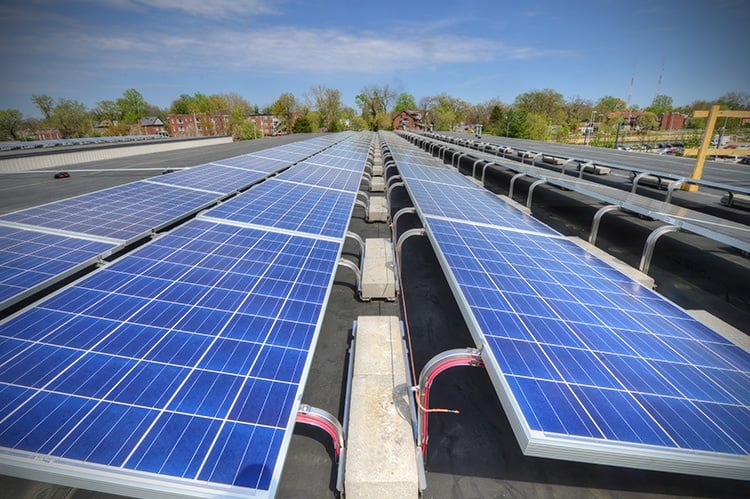
We tend to take the sun for granted. We don’t really think about how powerful it is until we feel the painful effects of a day at the lake. But the sun actually produces far more energy than we give it credit for—or take advantage of. It’s been said that enough energy pummels the earth every day to power the planet for an entire year.
Topics: Roof Architecture
The Two-Part Secret to Minimizing Energy Loss on Your Commercial Rooftop
Most of us who grew up in warmer climates can remember hearing shouts of, “Close the door! You’re letting all of the air conditioning out.” Our parents were all too aware of the effect those open doors had on their heating and cooling bills. Multiply that by about a hundred times, and it becomes clear why energy efficiency is so important for commercial buildings. But it’s not just open doors; it’s roof maintenance, too. The majority of energy loss by commercial buildings—both winter and summer—happens via the roof.
Topics: Roofing Management, Roofing Maintenance
Pipe Support Installation: 6 Reasons You Need a Zero-Penetration Method
Not only is there more than one type of rooftop pipe support, there is also more than one way of attaching those pipe supports to the roof surface. But they all break down into one of two categories: penetrating vs. non-penetrating. Penetrating pipe supports attach mechanically through the roof membrane, while non-penetrating pipe supports sit on the surface of the roof and are anchored with ballast. And there are a number of benefits to that.
Complying with OSHA regulations isn’t always easy – or cheap. But neither are OSHA citations and their accompanying costs. In fact, with the passage of the 2015 budget, fines for violating OSHA regulations are going up for the first time in 25 years. The new budget allows for increases of up to 150% of current fines. However, the details still have to be hammered out.
Topics: Roof Safety
Rooftop equipment and pipe supports take a beating. They’re constantly pounded by everything from temperature fluctuations to wind, rain, snow, and UV damage. And, just like the postal service, they have to come through in all kinds of weather. Most of the time, it’s your standard stuff. But, if your building is in an area prone to extreme weather events like hurricanes, tornadoes, and blizzards, it may take more than the basics to protect your building and its occupants.