

Are you as big of a fan of TED talks as we are? Innovative experts from around the world come to sound off on their ideas in short talks given at TED, which you may remember stands for Technology, Entertainment and Design.
8 Factors to Consider When Planning Roof Pipe Support Spacing
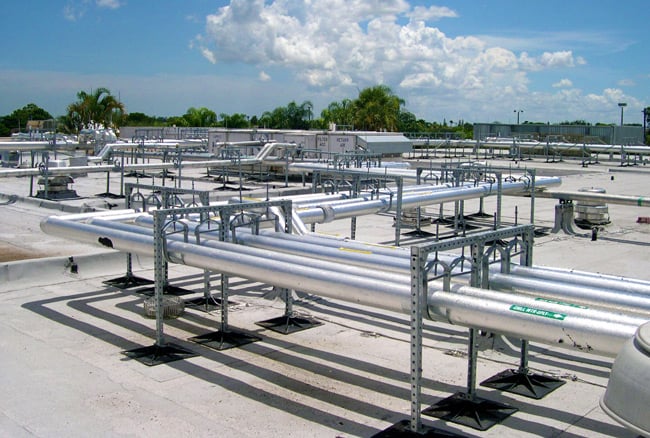
If you’ve worked in commercial roofing for a while, you know there are many variables that go into sound decision-making. It often comes down to a balancing act of trade-offs: what you get vs. what you give up. That’s no less true for roof pipe supports than for anything else. The fewer roof pipe supports you use, the lower your costs – and the less weight you add to the roof. On the other hand, if you don’t use enough supports, they’ll be spaced too far apart, putting your pipes and supports, as well as the roof itself, at risk. So how do you decide what’s right for your roof?
In 2012, Roofing Contractor magazine reported that more than four billion square feet of TPO single-ply roofing had been sold in North America over the previous five years alone. Today, single-ply roofs, whether TPO or PVC, continue to be a popular choice for both contractors and building owners. That popularity has led to a wealth of “best practices” compiled by contractors with years of experience in the field. Here are just a few of their tips:
Topics: Installation Tips
With the arrival of summer weather – and with many parts of the country experiencing record-breaking heat waves – it’s hard to ignore the power of the sun. It can make walking across the street seem like a marathon, it sends energy bills soaring, and it can make a parked car feel like a furnace. No wonder the sun gets a bad rap this time of year!
As an architect, there is a lot of study that goes into earning your license. However, it is important to realize that you will have to renew it periodically. Many states have Continuing Education requirements in place as a term of that renewal. Even if your state doesn’t require further education, the AIA does.
Topics: Roof Architecture
Hurricane season on the Atlantic and Gulf coast runs from June 1st through November 30th each year. The peak of the season tends to be in August and September. What this means for building owners, operators, and maintenance professionals is that it's time to put in a bit of work with regards to building, roof, and equipment supports to make certain commercial buildings are prepared for the potential storms ahead. While every structure will have different steps that must be taken to protect it, we’ve put together a few points you may want to consider as you prepare for potential inclement weather.
Topics: Roofing Management, Roof Safety
When it comes to harsh weather, most people think of cold, snow, and ice. But, if you manage a building in a warmer climate, you probably define harsh weather a little differently: blistering sun and heat punctuated by occasional rain and wind. And, since a roof’s main job is to protect the building and everything inside it, choosing the right low-slope roofing system for your climate is a business imperative.
Topics: Roofing Management, Roof Architecture
We’ve written quite a bit about green roofs and how adding a layer of vegetation can impact both the urban environment and a building’s energy efficiency. The latest industry trend, however, is blue roofing. And it’s all about storm water management.
Topics: Roofing Management, Roof Architecture
Roof coatings—you’ve probably heard that these can be beneficial to your roof and your building in general. We've put together a brief guide to help you understand the types of coatings available and the benefits of the product. This information can prepare you to make a smart decision regarding your roof's care.
Topics: Roofing Management, Roof Architecture
No matter if your building is brand new, or 100 years old, the roof is one of the most important structural elements. After all, the roof will not only protect the building from rain, snow and hail; it can also either help keep your building hotter or cooler during extreme temperatures. However, if you want to keep this important structure doing its job, you need to consider roof inspection regularly. But how often is needed? Let us discuss.
Topics: Roofing Management, Roofing Maintenance