

Roofing professionals will tell you that roof lifespans are typically based on averages. This is a function of location. But some materials will outperform others in any given place. The following guidelines are designed to help you make your roof perform to the very best of its potential, no matter where it may be.

7 Tips for Making Your Commercial Roof Stand the Test of Time
Topics: Rooftop Support Engineering, Roofing Management, Roofing Maintenance, Roof Architecture, Construction
When designing a school building, all safety and security measures must be taken into account in order to protect the lives and property of its occupants. In addition to limiting access to the campus through doors or gates, integrating security checkpoints into the flow of traffic and installing bollards where necessary, there are more recondite means of ensuring the integrity of the building and the safety of its users.
Topics: Rooftop Support Engineering, Roofing Management, Roof Safety, Roof Architecture
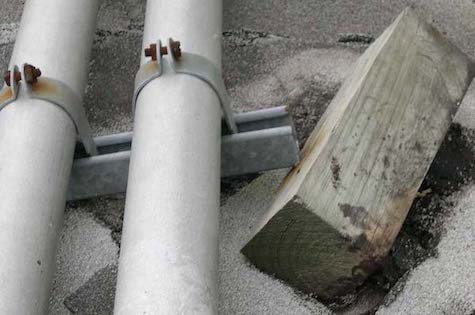
4 Reasons to Stop Using Wood for Rooftop Pipe & Equipment Supports
If you do business out of a building that is relatively old, it likely has wooden supports to hold up pipes and equipment on the roof. This approach to commercial and industrial rooftops deserves some fresh thinking, since better solutions are now available.
Topics: Rooftop Support Engineering, Roofing Maintenance, Roof Architecture
A lot of thought must go into choosing and installing cable trays in order to ensure the safety and effectiveness of the cables that run through them. Those systems ensure the effectiveness of the cables they protect, reduce wear and tear to rooftop installations, and help ensure safety for people, as well as, property.
Remember when your math teachers in grade school use to constantly tell you, "You have to memorize all these forumulas because once you graduate and get a job, you won't always have a calculator available"? Boy were they wrong! Beyond the simple calculator that's built into every phone these days, there are a multitude of smart phone apps on the market that can simplify any professional's day to day work life. So, if you're in the engineering field, check out the apps below, they could really make things easy for you!
Topics: Rooftop Support Engineering
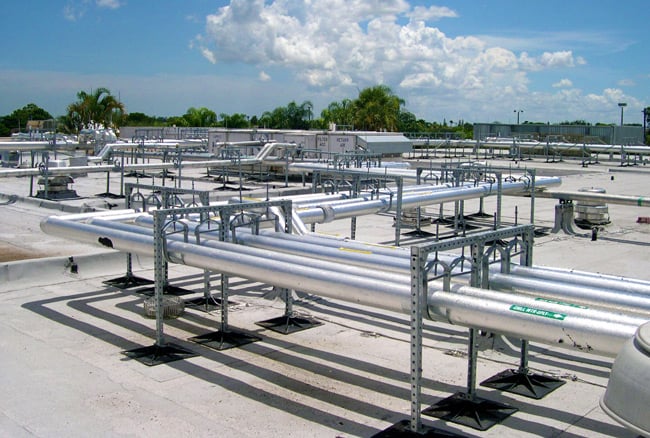
8 Factors to Consider When Planning Roof Pipe Support Spacing
If you’ve worked in commercial roofing for a while, you know there are many variables that go into sound decision-making. It often comes down to a balancing act of trade-offs: what you get vs. what you give up. That’s no less true for roof pipe supports than for anything else. The fewer roof pipe supports you use, the lower your costs – and the less weight you add to the roof. On the other hand, if you don’t use enough supports, they’ll be spaced too far apart, putting your pipes and supports, as well as the roof itself, at risk. So how do you decide what’s right for your roof?
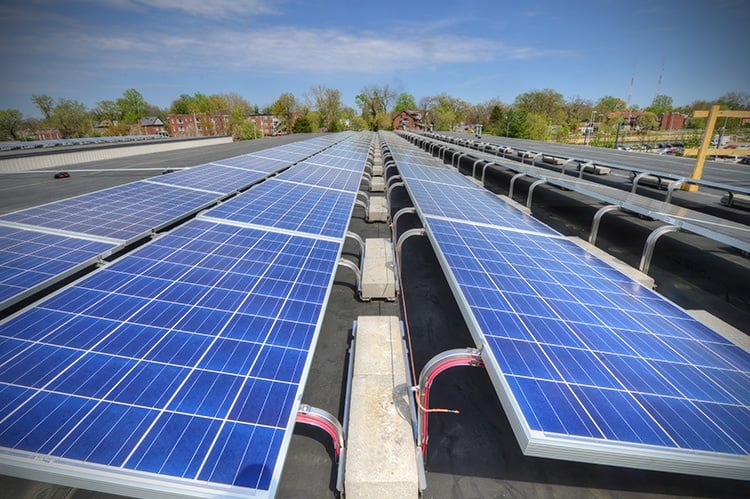
With the arrival of summer weather – and with many parts of the country experiencing record-breaking heat waves – it’s hard to ignore the power of the sun. It can make walking across the street seem like a marathon, it sends energy bills soaring, and it can make a parked car feel like a furnace. No wonder the sun gets a bad rap this time of year!
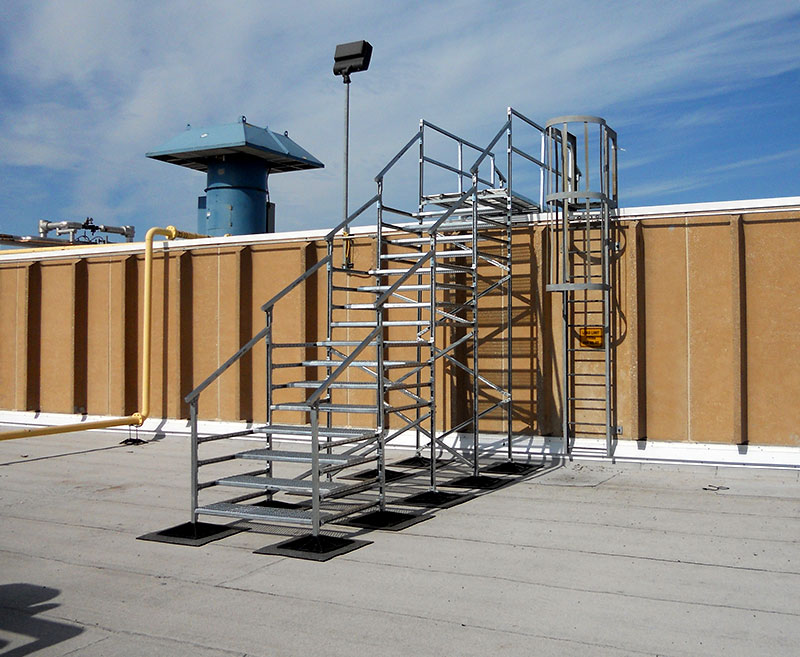
Maybe you’re a building manager who finally persuaded the owner to invest in a new roof. Or
maybe you’re the owner, and you just signed the check. Either way, you might be reluctant to spend even more money on “extras.” But things that extend the life of your roof and protect your workers aren’t extras; they’re the basics. Along with rooftop walkways, roof access stairs definitely fall into that category. Let’s take a look at why that’s true.
Pipe Support Installation: 6 Reasons You Need a Zero-Penetration Method
Not only is there more than one type of rooftop pipe support, there is also more than one way of attaching those pipe supports to the roof surface. But they all break down into one of two categories: penetrating vs. non-penetrating. Penetrating pipe supports attach mechanically through the roof membrane, while non-penetrating pipe supports sit on the surface of the roof and are anchored with ballast. And there are a number of benefits to that.
Rooftop equipment and pipe supports take a beating. They’re constantly pounded by everything from temperature fluctuations to wind, rain, snow, and UV damage. And, just like the postal service, they have to come through in all kinds of weather. Most of the time, it’s your standard stuff. But, if your building is in an area prone to extreme weather events like hurricanes, tornadoes, and blizzards, it may take more than the basics to protect your building and its occupants.