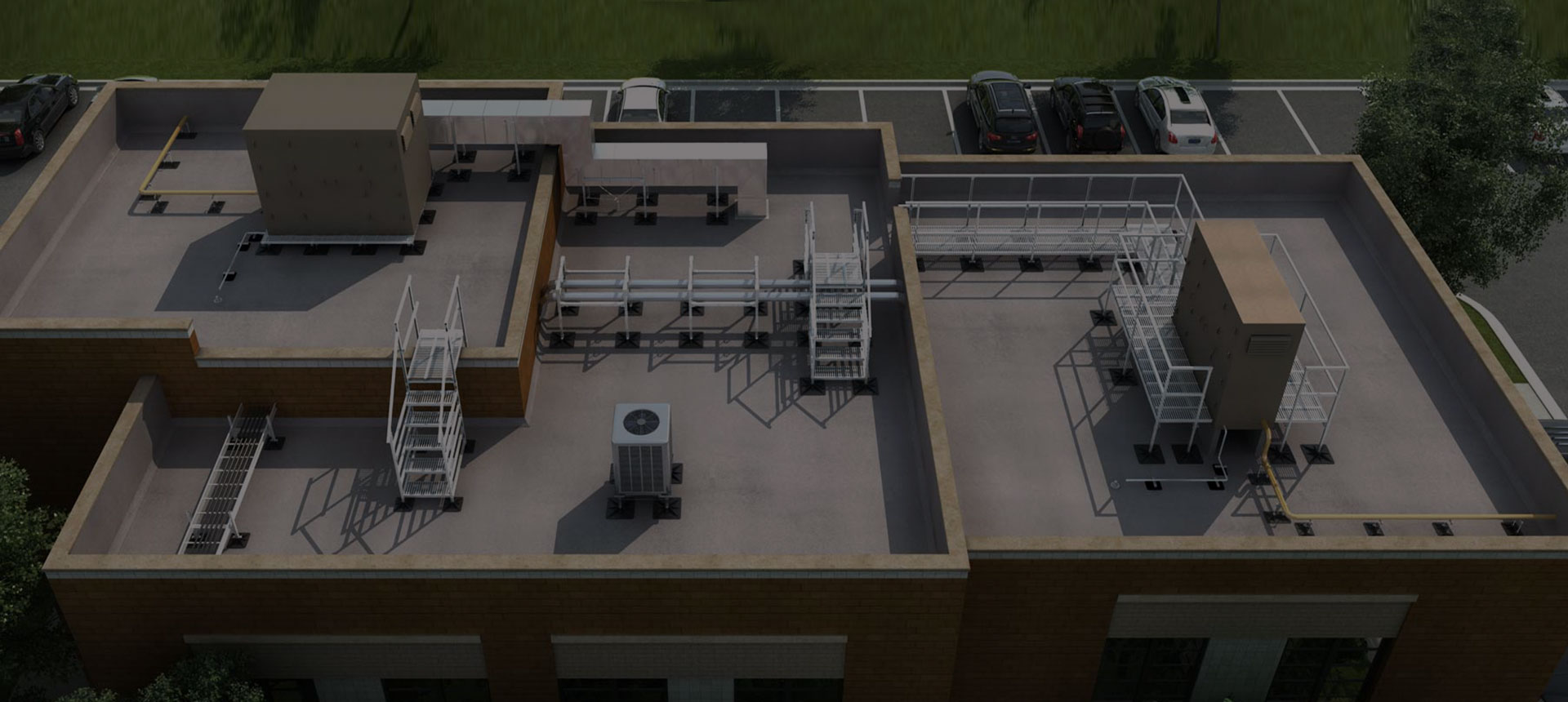
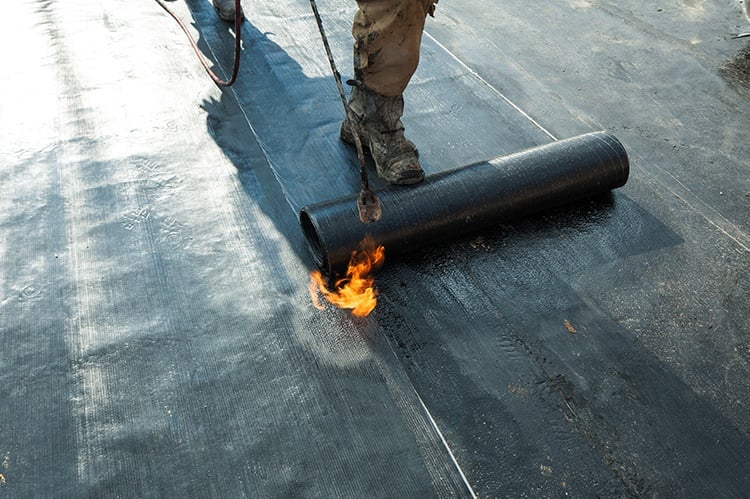
No matter if your building is brand new, or 100 years old, the roof is one of the most important structural elements. After all, the roof will not only protect the building from rain, snow and hail; it can also either help keep your building hotter or cooler during extreme temperatures. However, if you want to keep this important structure doing its job, you need to consider roof inspection regularly. But how often is needed? Let us discuss.
Art Valentz
Recent Posts
Every facility manager has budget constraints, and that means you have to make some choices about priorities. Decisions often lean toward “tyranny of the urgent” – you need a new roof, you need to repave the parking lot, etc. Things like launching sustainability initiatives and becoming LEED certified can seem like a luxury…but they aren’t.
Topics: Roofing Management, Roof Architecture
The days are getting longer, temperatures are creeping up, and you may have even swatted a few mosquitoes. Summer is definitely on the way, and facility managers know that means increased energy costs and a struggle to keep the building cool. Fortunately, you don’t have to cross your fingers and hope for cooler weather. With some proactive roof management, there are several things you can do to help keep your building cool.
Topics: Roofing Management
Maybe you’re a building manager who finally persuaded the owner to invest in a new roof. Or
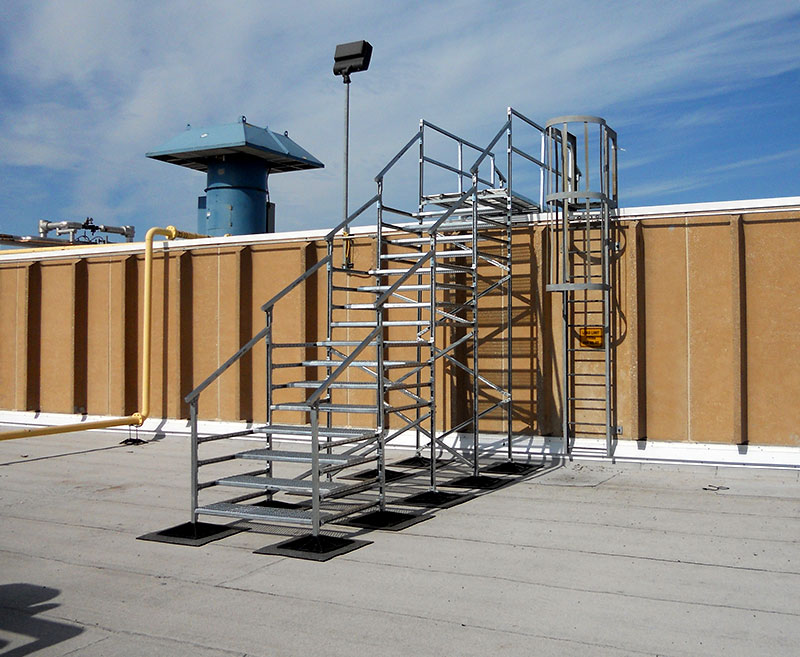
maybe you’re the owner, and you just signed the check. Either way, you might be reluctant to spend even more money on “extras.” But things that extend the life of your roof and protect your workers aren’t extras; they’re the basics. Along with rooftop walkways, roof access stairs definitely fall into that category. Let’s take a look at why that’s true.
Rooftop equipment and pipe supports take a beating. They’re constantly pounded by everything from temperature fluctuations to wind, rain, snow, and UV damage. And, just like the postal service, they have to come through in all kinds of weather. Most of the time, it’s your standard stuff. But, if your building is in an area prone to extreme weather events like hurricanes, tornadoes, and blizzards, it may take more than the basics to protect your building and its occupants.
Sometime this spring, OSHA is expected to release new rules regulating workers’ exposure to silica dust. These rules are expected to include two sets of standards, one for general and maritime industries, and one for the construction industry – and they could have a huge impact on your roof safety and standard procedures. Here’s what you need to know:
Topics: Roofing Management, Roof Safety
One of the most critical aspects of engineering a roof design is calculating weight loads. Mistakes can cause catastrophic overloads of pipe supports, employee injuries, or even worse, death. Every roof is different, so there is no magic formula that guarantees the right answer in every situation. But there are common factors that should be considered when calculating roof loads. Here are a few of the most important considerations:
Topics: Rooftop Support Engineering
2015 has ended and you know what that means: lots of resolutions for how you’ll live a better, healthier, kinder, neater, and more punctual life in 2016. Many of those resolutions will be long forgotten by the time the first spring flowers make their presence known, but there are some you really should keep: like the ones about ramping up your roof maintenance and care.
Topics: Roofing Management, Roofing Maintenance
Everybody knows TED. Just like Facebook, Adele, and Star Wars, TED is everywhere. The challenge is finding the good stuff, the diamonds that are buried among thousands of uploaded videos. We’re going to help you out with that. If you’re an architect, you absolutely have to watch these three TED Talks. They’re guaranteed to inspire you to see your work – and possibly your whole career – in a different way.
Topics: Roof Architecture
What is the Real Impact of Snow on Rooftop Equipment Supports?
Last winter delivered record-breaking snowfalls for much of the country, and many places have already seen the first snowfall of the 2015 fall/winter season. While meteorologists are still scratching their heads as the “Godzilla El Niño” and the “Siberian Snow Monster” battle for control of our weather, there’s one thing we do know: Any amount of snow or ice can take a toll on both your commercial rooftop (flat roofs are especially vulnerable) and your rooftop equipment supports.